Summary:
“Discover the 5 costly mistakes travelers make at Gatwick Airport, from terminal mix-ups to luggage woes. Learn actionable tips and expert advice to ensure a smooth, stress-free departure.”
London Gatwick Airport handles tens of millions of passengers every year processing over 40.9 million travelers in 2023 alone making it one of the busiest single-runway airports globally. While its layout is generally straightforward, the sheer volume of travelers means that simple errors can quickly turn into stressful, costly delays. According to recent aviation research, 1 in 5 travelers experiences pre-flight stress due to poor time management. Whether you are heading off on a much-needed family holiday or catching a crucial business flight, proactive preparation is your best defense against airport anxiety. From arriving at the incorrect terminal to misjudging security packing rules, small oversights can rapidly consume your precious pre-flight buffer.
Below, we break down the five most common mistakes travelers make at Gatwick Airport and exactly how you can avoid them for a seamless start to your journey.
Why Do Travelers Frequently Arrive at the Wrong Gatwick Terminal?
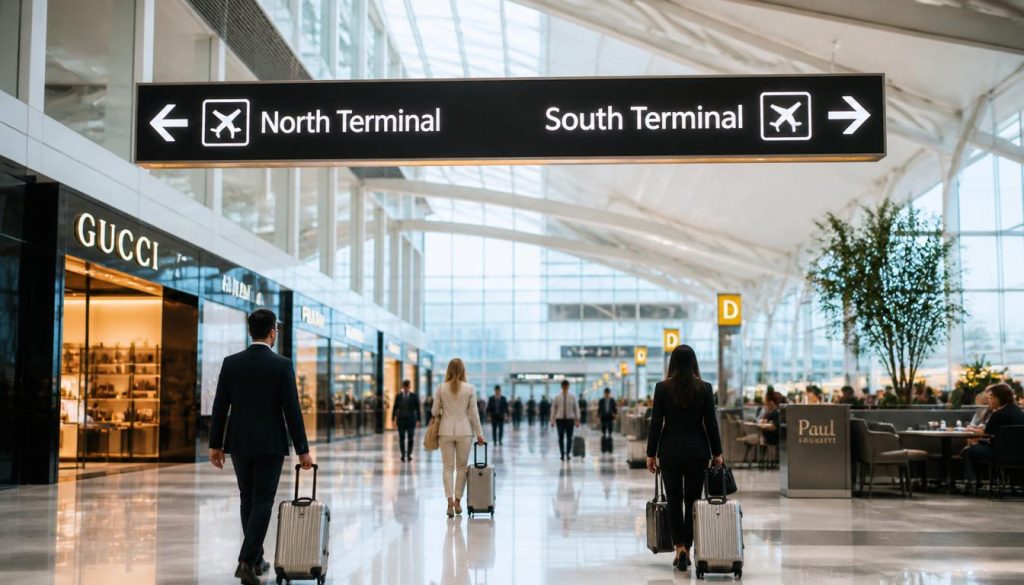
One of the most frequent and frustrating geographical errors travelers make is turning up at the wrong terminal. Gatwick operates two main terminals: the North Terminal and the South Terminal. Unlike smaller airports where a wrong turn means a two-minute walk, getting this wrong at Gatwick can be a serious setback.
Many passengers simply assume they know which terminal they are flying from based on past experiences. However, airlines frequently shift their operations. For instance, major carriers like easyJet operate flights out of both the North and South terminals depending on the specific destination and the time of year. If you rely on an outdated booking confirmation or simply guess, you might find yourself unloading your luggage in the wrong place.
If you do arrive at the wrong terminal, you will need to take the inter-terminal shuttle. While the actual transit time on the shuttle is only about two minutes, you must factor in the time spent walking to the transit station, waiting for the next shuttle, and then navigating to the correct departure zone once you arrive. In total, this detour can easily cost you 15 to 20 crucial minutes. When you are rushing to check bags before the desk closes, those 20 minutes are entirely unforgiving.
Quick Reference: North vs. South Terminal
| Feature | North Terminal | South Terminal |
|---|---|---|
| Major Airlines | easyJet, Emirates, JetBlue | British Airways, Ryanair, Vueling |
| Inter-Terminal Shuttle | Arrives every 3-5 mins | Arrives every 3-5 mins |
| Longest Gate Walk | Up to 20 mins (Pier 6) | Up to 15 mins |
| Security Fast Track | Available | Available |
Note: Always verify with your airline as terminal allocations can change.
How to avoid this: Always check your specific terminal via the airline’s official mobile app exactly 24 hours before your departure. Do not rely solely on your original booking email, as terminal assignments can and do change.
How Does Failing to Weigh Baggage Before Arrival Cause Stress?
Turning up at the airport without checking your baggage limits is a surprisingly common and costly error. Budget airlines operating heavily out of Gatwick, such as easyJet and Ryanair, have notoriously strict policies regarding both the weight and dimensions of cabin and hold luggage.
The mistake usually happens when travelers assume their bags will be “close enough” or rely on outdated allowance rules. If your bag is oversized or overweight at the check-in desk or boarding gate, you will be forced to either hastily repack your items on the terminal floor or pay exorbitant excess baggage fees. These fees are significantly higher when paid at the airport compared to pre-booking extra weight online. Not only does this drain your holiday budget before you have even boarded, but the time spent reorganizing your luggage can severely cut into your pre-flight buffer.
How to avoid this: Invest in an inexpensive digital luggage scale and weigh your bags at home. Always measure the dimensions of your carry-on against the specific airline’s current guidelines. If you know you are going to be over the limit, upgrade your baggage allowance online at least 24 hours before your flight to secure the cheaper rate.
How Does Poor Hand Luggage Packing Slow Down Security?
We all know the rules, yet poor hand luggage packing remains the absolute biggest bottleneck at airport security. The strict 100ml liquid rule has been in place for years, but travelers consistently forget to separate their liquids into a clear, resealable plastic bag before reaching the scanner.
Equally problematic is the failure to easily access large electronics. If your laptop or tablet is buried at the bottom of a tightly packed carry-on bag, you will spend frantic minutes digging it out while the queue behind you grows impatient. When your bag is flagged for a manual search because a liquid or electronic device wasn’t removed, you can expect to lose at least 10 to 15 minutes waiting for a security officer to inspect it.
To put this into perspective, an industry expert and former gate agent notes: “Most travelers assume the security line itself is the biggest hurdle. In reality, the biggest cascading delay isn’t a lack of staff; it’s the 45 seconds lost per passenger when a laptop is left at the bottom of a carry-on, triggering a manual search.”
Breakdown of Security Delays
Here is a visual breakdown of what causes the most significant hold-ups at airport security checkpoints, based on airport operations research:
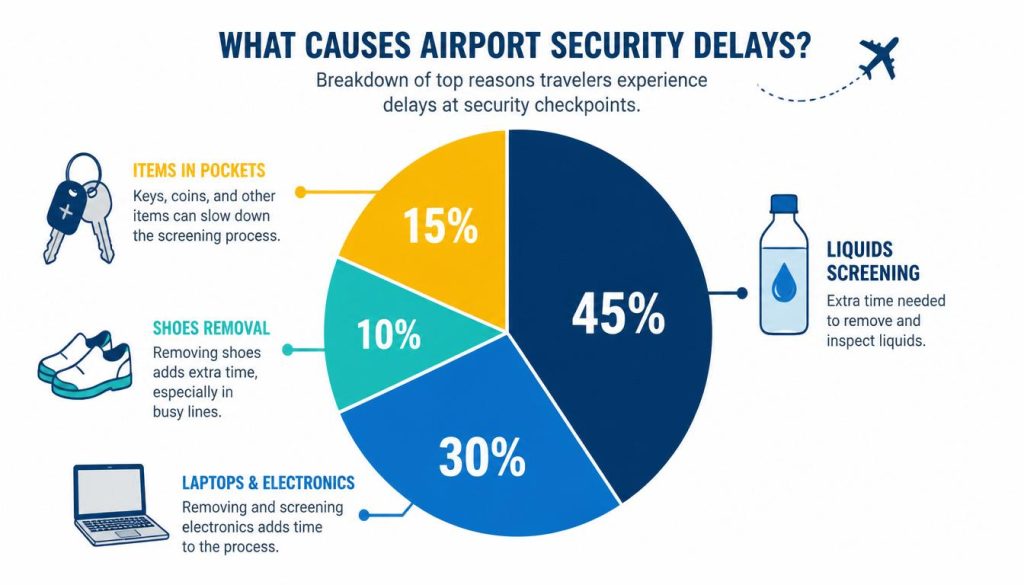
How to avoid this: Pack strategically. Keep your liquids bag in an outer pocket of your hand luggage. Ensure your laptop or tablet is the last thing you pack so it is the first thing you can pull out. If you want to bypass the bulk of the queues entirely, consider investing in fast-track security passes, similar to the convenience offered by Fast Track Heathrow services.
Why is Relying Solely on Departure Screens a Risky Strategy?
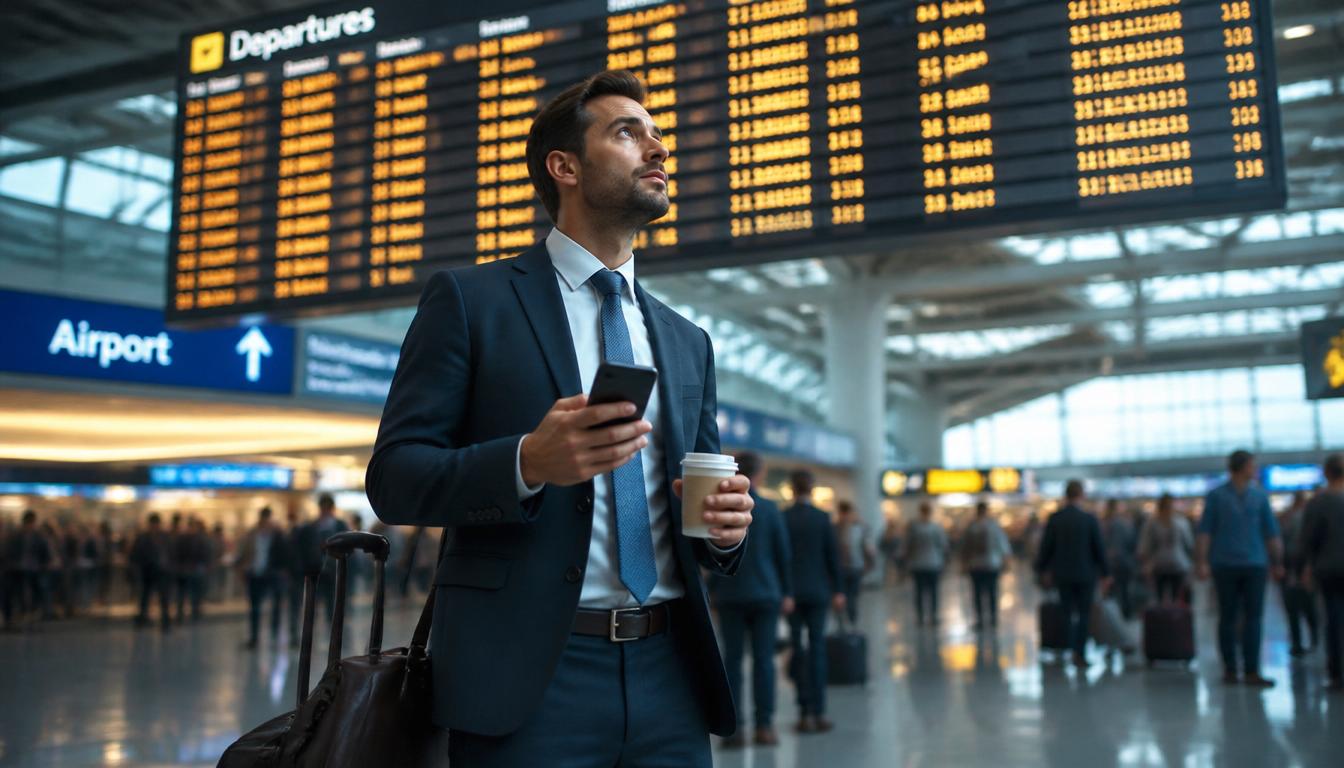
Once through security, many travelers breathe a sigh of relief, grab a coffee, and passively watch the giant departure screens in the main lounge to find out their gate number. In today’s digital age, relying solely on these physical screens is a risky strategy.
Many airports, including Gatwick, are increasingly adopting “silent airport” policies to reduce noise pollution. This means that final boarding calls and gate changes are rarely broadcast over the public address system unless it is an absolute emergency. If you are engrossed in a book or wearing noise-canceling headphones, you will never hear the announcement.
Furthermore, gate information and boarding announcements almost always hit the airline’s mobile app via push notifications 5 to 10 minutes before they physically populate on the main terminal screens. If you wait for the board to update, you are already behind the curve.
How to avoid this: Download your airline’s mobile app before you leave for the airport and ensure push notifications are enabled. You will receive real-time alerts about gate assignments, boarding times, and any unexpected delays directly to your phone, giving you a head start over the crowds.
How Can Underestimating Walking Distances Lead to Missed Flights?
The sheer size of Gatwick’s terminals is often underestimated. After clearing security, it is easy to lose track of time while enjoying a meal, shopping in duty-free, or relaxing in a premium lounge. The mistake happens when passengers assume their gate will be just a short stroll away.
Both Gatwick terminals have gates that require a surprisingly long walk from the main departure lounge. For example, reaching Pier 6 in the North Terminal involves crossing the spectacular passenger bridge over the taxiway. While the views of the aircraft are fantastic, the walk itself can take a brisk 15 to 20 minutes from the central hub. If you wait until the screen says “Final Call” to start making your way to these distant gates, you are in serious danger of missing your flight. The gate agents will close the doors exactly when they are scheduled to, regardless of whether you are sprinting down the moving walkways.
“Aviation data shows that up to 15% of flight delays are indirectly caused by late passenger boarding. At large hubs like Gatwick, travelers frequently misjudge the 20-minute walk to distant gates, assuming they can cover the distance in five minutes. Once the gate closes, it stays closed.”
— Sarah Jenkins, Former Aviation Operations Manager
How to avoid this: Do not wait for the boarding call. As a general rule, set an alarm on your phone for 15 minutes before the stated boarding time. When the alarm goes off, wrap up your shopping or dining and begin walking toward the general gate area. It is far better to wait 10 minutes at the gate than to watch your plane push back from the tarmac without you.
Conclusion: Start Your Journey the Right Way
Travel mistakes compound. Arriving at the wrong terminal costs you 20 minutes. Repacking your bags at security costs another 10 minutes. Reorganizing overweight luggage at check-in costs 15 minutes. Combined, these completely avoidable errors can consume your entire pre-flight buffer, turning what should be an exciting departure into a frantic, sweat-inducing sprint.
Preparation is the ultimate travel hack. By verifying your terminal, weighing your luggage beforehand, packing your carry-on strategically, utilizing airline apps, and respecting the walking distances, you guarantee a smooth and stress-free experience.
If your future travel plans involve flying out of London Heathrow instead of Gatwick, ensuring a VIP start to your journey is even easier. Explore our extensive Airports We Cover and consider elevating your next trip with a dedicated Porter Service or comprehensive VIP Meet and Greet Heathrow package. Start your journey the right way relaxed, prepared, and entirely on time.