Summary
“Flying with elderly parents through Heathrow presents unique challenges from 1.4 km terminal walks to crowded immigration halls that overwhelm aging travelers. This guide breaks down terminal-specific distances, security hurdles, and cognitive demands seniors face, while offering practical solutions including professional meet and greet services. Whether planning a solo trip for aging parents or managing complex connections, you’ll find actionable steps to ensure their comfort and your peace of mind.”
Planning a trip flying with elderly parents through Heathrow Airport (LHR) often feels overwhelming. As an adult child, you’re juggling their comfort, your peace of mind, and the realities of the world’s busiest international hub. With over 80 million passengers annually, Heathrow’s scale amplifies challenges for seniors, long walks, crowds, and processes not designed for reduced mobility.
This guide focuses on real hurdles families face, from physical strain to cognitive demands, using Heathrow-specific data. We’ll cover terminal distances, security realities, and proven solutions like airport assistance. Drawing from official Heathrow accessibility info and UK aviation guidelines, you’ll get actionable steps to make flying with elderly parents smoother. Whether it’s your parents’ first flight in years or a complex connection, these insights help you decide confidently.
Physical Challenges Seniors Face at Large Airports
Seniors over 75 often deal with joint pain, balance issues, and fatigue that everyday walks don’t trigger. At Heathrow, these become acute in a facility spanning multiple terminals and kilometers of corridors.
Walking Distances That Exhaust Even Fit Travelers
Heathrow’s terminals require significant trekking, even for healthy adults. Gate-to-gate distances add up quickly, especially with luggage or connections.
| Terminal | Gate-to-Gate Distance | Approx. Walking Time (Normal Pace) |
| Terminal 5 | Up to 1.4 km | 15-20 minutes |
| Terminal 3 | Up to 0.8 km | 10-15 minutes |
| Terminal 2 | Up to 1.1 km | 12-18 minutes |
| Terminal 4 | Up to 0.9 km | 10-15 minutes |
Source: Heathrow Airport official terminal maps and accessibility pages (2025).
These equate to 10-15 city blocks per leg. For elderly parents with arthritis or post-surgery recovery, this means pain flares after 20 minutes. Cumulative effects hit hardest on arrivals: immigration, baggage claim, then customs another 500-800 meters.
Standing Requirements and Queue Fatigue
Static standing compounds issues. Security queues average 20-40 minutes at peaks, check-in 15-30 minutes. Immigration halls pack 500+ passengers, with waits up to 60 minutes during evenings.
Circulation slows in arthritic legs; poor circulation risks swelling. Many seniors report dizziness from prolonged standing on hard floors. Without wheelchair assistance at Heathrow, families end up supporting parents physically, risking injury to all.
Cognitive Overload in Busy Terminal Environments
Beyond bodies, minds tire. Aging brains process less amid chaos, leading to confusion or anxiety common when traveling with aging parents.
Sensory Challenges for Aging Passengers
Heathrow’s 80+ million yearly visitors create noise peaks of 85-90 decibels louder than a vacuum cleaner. Announcements overlap every 2-3 minutes, hard for hearing-impaired seniors (affecting 1 in 3 over 75, per Age UK).
Visual overload hits too: flashing screens, multilingual signs, moving crowds. Dim lighting in some older areas strains presbyopia. Crowds trigger spatial disorientation, especially for those with vestibular issues.
Wayfinding Difficulties and Decision Fatigue
Terminals have 100+ decision points: escalators vs. lifts, left or right for gates. Gate changes (common in T5) demand quick adaptation. Self-check-in kiosks baffle 40% of seniors, per CAA surveys.
Time pressure amplifies this miss a connection, and stress spikes. For parents with mild cognitive decline, this risks senior airport support needs beyond family guidance.
Heathrow Terminal-by-Terminal Accessibility Reality
Each terminal varies in layout, age, and volume, impacting flying with elderly parents. Connections add transit trains or buses.
Terminal 5 (British Airways Hub)
Heathrow’s largest, T5 handles 20 million passengers yearly. Multi-level design means lifts everywhere, but walks reach 1.4 km. Satellite piers require a 5-minute airside train—disorienting for first-timers. High BA volume means busier security (30-45 min peaks).
Terminals 2, 3, and 4 Considerations
Terminal 2 (Star Alliance): Modern, wide corridors, but 1.1 km spans and rooftop walks to gates. Terminal 3: Narrower, older paths; 0.8 km but congested with long-haul arrivals. Terminal 4 (isolated): Needs Heathrow Express or bus from central; 0.9 km internally, but transfer adds 15-20 min.
All offer lifts, but peak crowds slow access. For airport navigation elderly parents, inter-terminal moves demand planning.
Immigration and Security Challenges for Slower Passengers
Processes test pace and patience, where slower elderly airport assistance users face pressure.
Security Screening Complications
Queues form at 20-50 deep. Removing shoes/belts strains backs; liquids (100ml rule) confuse. Medical aids like pacemakers need explanation officers may require tests. Pat-downs for wheelchairs take extra time, with dignity issues in public view.
Behind-queue impatience adds stress. Families report parents feeling rushed, leading to forgotten items.
UK Border Force Processing
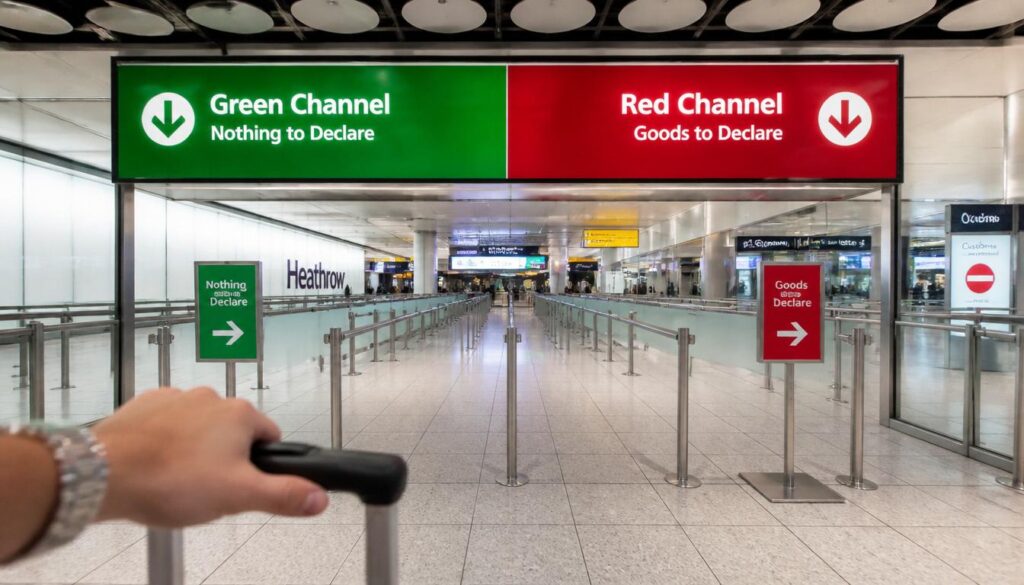
E-gates suit ages 12+ with biometrics, but many seniors (preferring manual desks) face 30-60 min lines at peaks. Questions on stay duration trip up jet-lagged minds. Documentation (ESTA/ETA proofs) must be organized.
UK Border Force prioritizes PRMs, but volume delays help. Immigration elderly passengers often need family advocacy.
Real Scenarios Where Families Found Solutions
Families share these common experiences, highlighting flying with elderly parents realities and fixes.
Scenario 1: The Long-Haul Connection
A couple from Delhi connects in Terminal 2 with 90 minutes. Jet lag hits; 800m walk to next gate looms. Pre-booked meet and greet service met them curbside, wheeled through immigration (skipping main queue), and escorted to gate connection made stress-free.
Scenario 2: First Flight in Five Years
A 78-year-old father flies solo to see grandchildren via Terminal 3. Post-pandemic kiosks bewilder; security daunts. Mobility helps the airport from arrival: staff handled check-in, explained scanners, accompanied through. He arrived calm, no tech meltdowns.
Scenario 3: Parents With Early Dementia
Spouses in T5; one wanders mildly. Crowds trigger confusion. Dedicated airport escort service stayed paired with them, paced slowly, and used a quiet lounge pre-boarding. No separation, minimal anxiety, the family waited relaxed at the destination.
These show professional airport escort fills gaps airline basics miss.
How Professional Airport Assistance Bridges the Gap
Meet and greet Heathrow services go beyond free airline PRM (Persons with Reduced Mobility), offering end-to-end support for senior travel support.
What Meet and Greet Services Include
Trained staff greet curbside on arrival/departure. They manage luggage, navigate all stages of check-in, security, immigration, and gates. Priority lanes where possible; direct airline coordination. Aircraft-side handover for flights. No family rushing needed.
Differentiates from airline wheelchairs (intermittent porter pushes) by providing one continuous escort.
When Professional Assistance Makes Sense
Ideal for: first-time senior flyers, mobility/cognitive concerns, tight connections, odd-hour flights, unaccompanied parents. Cost weighs against injury risk or distress many families prioritize after one tough trip.
For VIP airport assistance, book via providers like Meet and Greet Heathrow: explore options.
Practical Steps to Prepare Elderly Parents for Heathrow
Equip your parents and yourself with this checklist for flying with elderly parents.
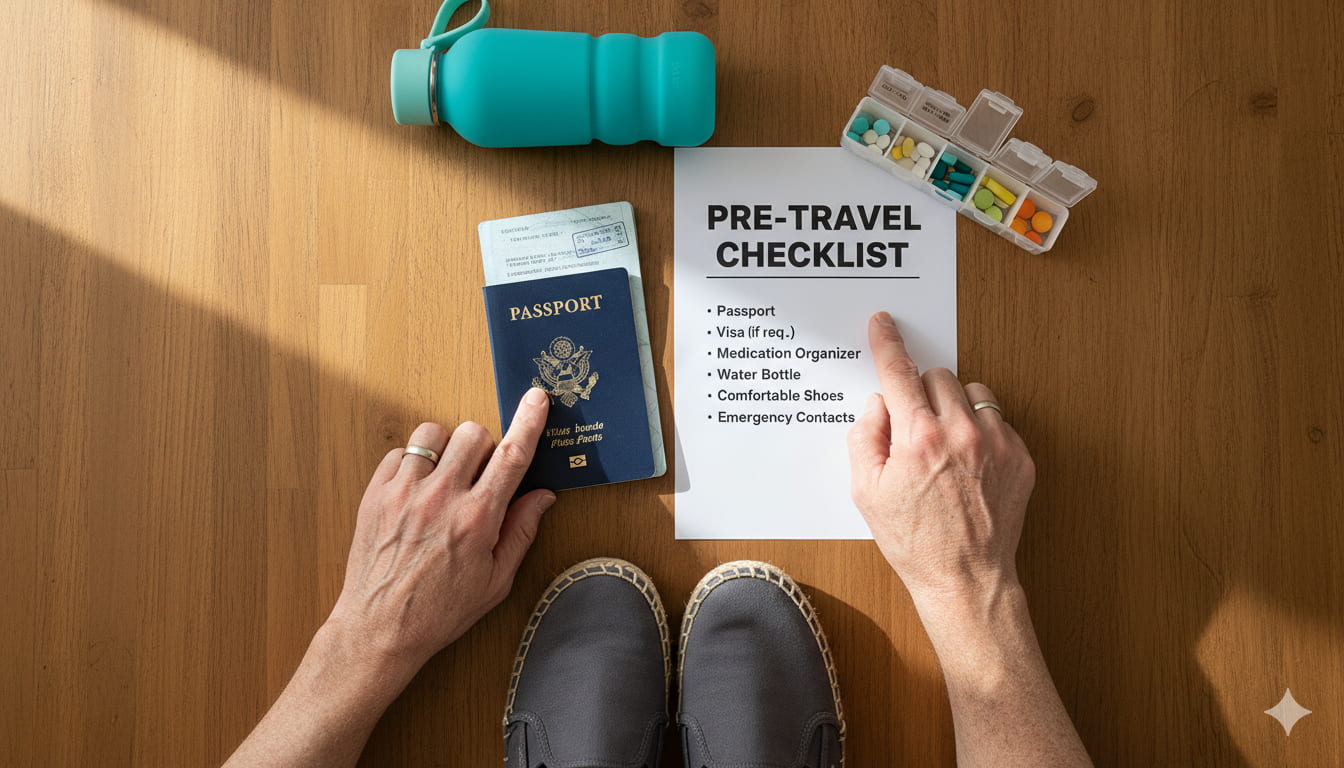
Pre-Travel Checklist
Documentation:
- Check passport (valid 6+ months).
- Print flight details (large font).
- Medication list/doctor note.
- Emergency contacts card.
Physical Prep:
- Slip-on shoes, layered clothes.
- Carry-on meds, snacks, collapsible water bottle.
- Walking aid if needed.
Communication:
- Charged phone with ICE numbers.
- Simple itinerary sheet.
- Airline app tutorial pre-trip.
Airport Arrangements:
- Request wheelchair assistance at Heathrow 48-72 hours via airline.
- Book meet and greet service for extras: Heathrow Terminal 5 assistance.
- Lounge for rest if eligible.
- Confirm special meals.
Practice a mock security run at home.
Questions Families Frequently Ask
Can elderly parents use e-gates at Heathrow?
Passengers 12+ with biometric passports qualify, but many seniors opt for staffed desks due to tech unfamiliarity or mobility. Lines vary; PRM desks prioritize.
How far in advance should we request wheelchair assistance?
Airlines need 48-72 hours notice, per CAA rules. Book earlier in peaks; confirm 24 hours pre-flight.
What if parents get confused between gates?
Terminal staff help, but pre-arrange VIP airport escort for seamless guidance. Flight info screens update live.
Is meet and greet service worth the cost for elderly travelers?
Yes, for complex trips peace of mind trumps expense. Compared to family accompaniment or risks. See wheelchair assistance at Heathrow.
Conclusion
Flying with elderly parents at Heathrow demands awareness of distances, crowds, and processes but preparation changes everything. From 1.4 km treks in T5 to security queues, targeted steps like checklists and assistance make it manageable. Families regain control, parents travel comfortably.
For added ease, meet and greet Heathrow integrates naturally. Empower your decision today safe journeys ahead.