Flying through London Heathrow Airport can feel like navigating a maze of endless queues, confusing terminals, and stressed travelers. You’ve probably seen the Fast Track service advertised and wondered: “Should I actually pay for this?”
Let’s cut through the marketing speak and examine what Heathrow Fast Track really delivers and when it makes sense for your trip.
What Exactly Is Heathrow Fast Track?
Heathrow Fast Track isn’t a single service; it’s actually two separate options designed to speed you through different parts of your airport journey.
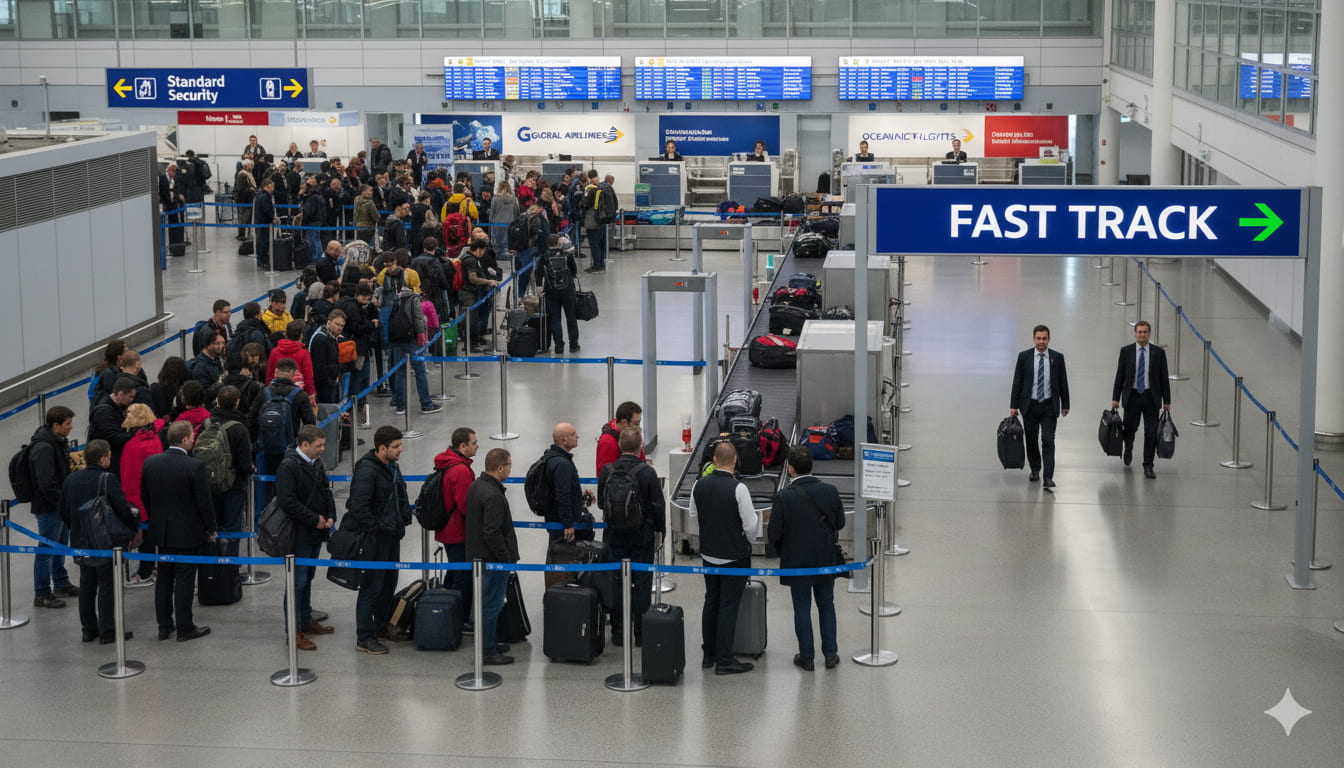
Fast Track Security (Departures) allows you to skip the standard security queues when leaving the UK. You’ll access a dedicated lane that typically processes passengers much faster than the general screening areas.
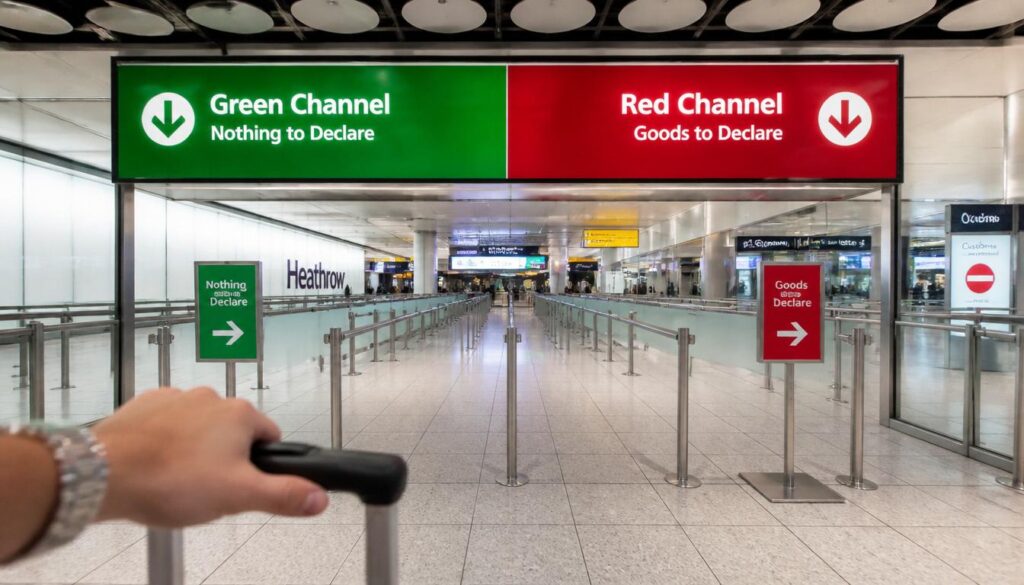
Fast Track Arrivals (Immigration) is the newer service that lets you bypass the often-notorious immigration queues when landing at Heathrow. This is particularly valuable for passengers who can’t use the automated e-Gates.
The Reality of Heathrow Queues in 2025
Before deciding whether Fast Track is worth it, you need to understand what you’re actually up against at Heathrow.
Security Wait Times: Not as Bad as You’d Think
Current data shows that security queues at Heathrow average between 15-20 minutes during normal periods. During peak hours, typically early morning (6:00 AM to 9:00 AM) and early evening (6:00 PM to 8:00 PM), this can stretch to 35-45 minutes. 59% of passengers reported queuing 1-5 minutes at security. (gov.uk)
Terminal 5, which handles most British Airways flights, often moves faster than the other terminals due to better infrastructure and more screening lanes. Terminals 2 and 3 can experience bottlenecks, especially when multiple long-haul flights depart simultaneously.
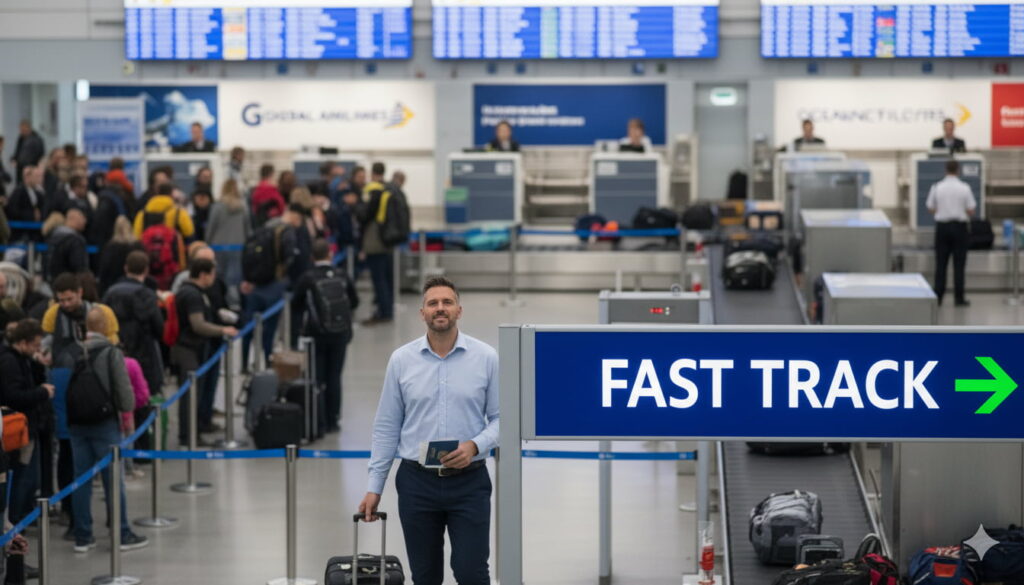
The Fast Track security lane typically gets you through in 5-10 minutes, even during busy periods. That’s a time saving of 10-30 minutes depending on when you travel.
Immigration Wait Times: The Real Problem
This is where things get genuinely frustrating. Immigration queues at Heathrow have become legendary for all the wrong reasons.
If you can use the e-Gates automated passport control machines available to UK, EU, US, Canadian, Australian, New Zealand, Japanese, Singaporean, and South Korean passport holders, you’ll typically clear immigration in under 10 minutes. These electronic gates work efficiently and rarely have long queues.
But if you need to see an immigration officer, the story changes dramatically. Non-e-Gate passengers regularly wait 30-60 minutes during off-peak periods. During busy periods, particularly when multiple long-haul flights from Asia, the Middle East, and Africa arrive simultaneously, wait times can stretch to 90 minutes or even two hours. In some instances, wait times have reached up to 2½ hours. (onemileatatime.com)
Terminal 5 handles the most arrivals and consequently has the worst reputation for immigration delays. Terminals 2 and 3 also experience significant congestion during peak arrival windows (6:00 AM to 10:00 AM and 2:00 PM to 8:00 PM).
Fast Track Arrivals doesn’t eliminate the wait entirely, but it typically cuts it by 50-70%, bringing a potential two-hour wait down to 20-30 minutes.
Important Reality Check: When Fast Track Doesn’t Guarantee Speed
Here’s what Heathrow doesn’t advertise prominently: they cannot guarantee specific wait times or queue lengths for Fast Track services.
Why? Because everyone using Fast Track still goes through the same security procedures and the same immigration officers. You’re not getting a different level of screening, you’re just accessing a shorter queue.
During extreme congestion or when security incidents occur, even Fast Track lanes can slow to a crawl. Immigration and security personnel retain final authority over processing speeds, and Fast Track customers receive no special treatment once they reach the actual screening or immigration desk.
Terminal operational issues can also impact Fast Track effectiveness. If staff shortages occur or equipment malfunctions, the dedicated Fast Track lanes might not even be operating. While rare, these situations do happen.
The booking system requires you to select a one-hour arrival or departure window. If your flight gets delayed and you miss your window, Heathrow will “endeavor” to accommodate you, but this isn’t guaranteed. Missing your slot means potentially losing the benefit you paid for.
Fast Track Security: How Much Time Do You Really Save?
Let’s get specific about departure security queues.
During quiet periods (mid-morning and early afternoon on weekdays), standard security queues rarely exceed 15 minutes. Many frequent Heathrow travelers report clearing security in under 10 minutes during these times.
The value proposition changes during peak departure times. Friday evenings, Sunday evenings, and early Monday mornings see the heaviest traffic. School holiday periods and major travel seasons (Christmas, Easter, summer) create significant bottlenecks.
During these busy windows, standard security can take 30-45 minutes. Fast Track reduces this to 10-15 minutes. For travelers on tight connections or those who value stress reduction, saving 20-30 minutes starts to justify the cost.
Business travelers who frequently fly through Heathrow during peak times often find Fast Track security worth the investment. The consistency and predictability matter as much as the time saved. Knowing you’ll clear security quickly reduces anxiety and allows for more productive use of pre-flight time.
Fast Track Immigration: The Arrival Experience Explained
Fast Track Arrivals represent better value than Fast Track Security for most international travelers who can’t use e-Gates.
The service operates from 6:00 AM to 9:00 PM across all terminals, with peak pricing applying during the busiest arrival windows. Peak times vary by terminal, but generally include early morning hours (6:00 AM to 9:00 AM) and evening periods (6:00 PM to 9:00 PM).
When you land, you’ll follow signs to the Fast Track Arrivals entrance. A host verifies your booking confirmation and directs you to a dedicated lane. You still see a UK Border Force officer and answer the same questions, but you skip the massive general queue.
The real value emerges during busy periods. If you’re arriving from Asia, the Middle East, or Africa on a flight that lands simultaneously with several others, the standard immigration queue can be genuinely awful. Travelers report standing for 90-120 minutes without access to bathrooms, water, or anywhere to sit.
Fast Track Arrivals transforms this nightmare scenario into a manageable 20-30 minute wait. For travelers after long-haul flights, this difference is substantial.
Terminal Variations: Where Fast Track Works Best
Not all Heathrow terminals are created equal when it comes to Fast Track effectiveness.
Terminal 5 processes the most passengers and has the best infrastructure. Fast Track Security lanes operate efficiently here, though the sheer volume of travelers means even Fast Track can experience delays during peak periods. Immigration at Terminal 5 has the worst reputation for wait times, making Fast Track Arrivals particularly valuable.
Terminal 2 handles many Star Alliance and transatlantic flights. Security queues are generally reasonable, making Fast Track Security less essential. Immigration can back up when multiple long-haul flights arrive simultaneously, particularly from North America in the morning.
Terminal 3 serves Oneworld airlines and several major international carriers. The terminal’s layout can create confusion, and security queues often extend into the check-in area during busy periods. Fast Track Security provides more tangible benefits here than at other terminals.
Terminal 4 reopened recently after COVID-19 closures and handles a mix of airlines. Queue patterns are still stabilizing, but generally fall between Terminal 2 and Terminal 5 in terms of congestion.
| Terminal | Average Security Wait Time | Average Immigration Wait Time |
|---|---|---|
| Terminal 5 | 10–20 minutes | 30–60 minutes |
| Terminal 2 | 15–25 minutes | 20–40 minutes |
| Terminal 3 | 20–30 minutes | 40–70 minutes |
| Terminal 4 | 25–35 minutes | 50–90 minutes |
Heathrow Peak Hours by Terminal
T2: 6am to 9am, 6pm to 9pm
T3: 6am to 9am, 1pm to 9pm
T4: 6am to 9am, 12noon to 9pm
T5: 6am to 9am
Frequently Asked Questions
What exactly is Heathrow Fast Track?
- Heathrow Fast Track includes two services: Fast Track Security, which helps you skip standard security queues at departures, and Fast Track Arrivals, which allows you to bypass immigration queues upon arrival. Both services aim to speed up the process but don’t guarantee specific wait times.
Does Heathrow Fast Track guarantee faster processing?
- While Fast Track provides a dedicated lane, it doesn’t guarantee a faster process through security or immigration. The service merely shortens the queue, but actual processing speed depends on factors like operational issues or staffing shortages.
Is Fast Track worth it for security?
- If you’re traveling during peak hours, Fast Track can save you up to 30 minutes by bypassing long security queues. However, during off-peak times, security waits are usually short, making the service less essential for some travelers.
What is Fast Track Arrivals, and is it worth it?
- Fast Track Arrivals helps you skip the long immigration queues, especially during peak periods when wait times can exceed an hour. It reduces wait times by 50-70%, making it more valuable for long-haul travelers, particularly those who can’t use e-Gates.
Which terminal is best for using Fast Track?
- Terminal 5 is known for its efficient Fast Track services, particularly for security. However, it experiences significant congestion at immigration. Terminal 3 benefits from Fast Track Security due to frequent long-haul flights, while Terminal 2 sees fewer advantages with Fast Track Security due to generally shorter wait times.
How does Fast Track work if my flight is delayed?
- If you miss your booked Fast Track window due to a delayed flight, Heathrow will try to accommodate you, but this isn’t guaranteed. It’s important to plan accordingly and allow enough time to clear security and immigration.
Can Fast Track help during extreme peak travel times?
- Yes, Fast Track is most beneficial during extreme congestion, especially when multiple long-haul flights arrive at the same time. It can significantly reduce wait times during these busy periods, but during incidents or equipment failures, even Fast Track queues might be delayed.